PEOPLE AND RECRUITMENT
NOSMO Workforce
Worker App and Agency Desk use controlled identity, credential and availability records.
Construction operating and integration layer
Active buildNexus carries shared construction context across people, projects, communication, existing software and NOSMO modules. It connects what already works instead of demanding another full system replacement.
Nexus Core
The objects stay understandable. Their relationships, permissions and source boundaries make them useful across the project lifecycle.
Identity, role, skill and controlled sharing.
Shared project context and structure.
Drawings, schedules and controlled files.
Assignable work, readiness and evidence.
Actions, changes, approvals and decisions.
Durable history with source boundaries.
Relationships between people, objects and work.
Natural-language access to authorised context.
Existing platforms, BIM tools, messaging and file sources.
Private, professional and project access remain explicit.
Nexus modules
BIM and WorkSuite sit alongside each other. WorkSuite is the home for trade applications; BIM handles model and object context.
Worker App and Agency Desk use controlled identity, credential and availability records.
Models and object identities connect to the people, documents, evidence and history around them.
Focused execution, inspection and commissioning apps for different trades.
Existing software and communication
Integration should preserve useful source systems while adding the missing relationship between the person, project, task, evidence and decision.
Targets include Work Wallet, Procore, Dalux, Viewpoint, CompanyCam and other established workforce, project and evidence tools.
Email, WhatsApp, SMS and contacts can be connected to the correct person or project through a controlled pre-action layer.
Model-authoring, coordination, Drive, document storage and specialist systems can remain authoritative sources connected through Nexus.
Connected project memory
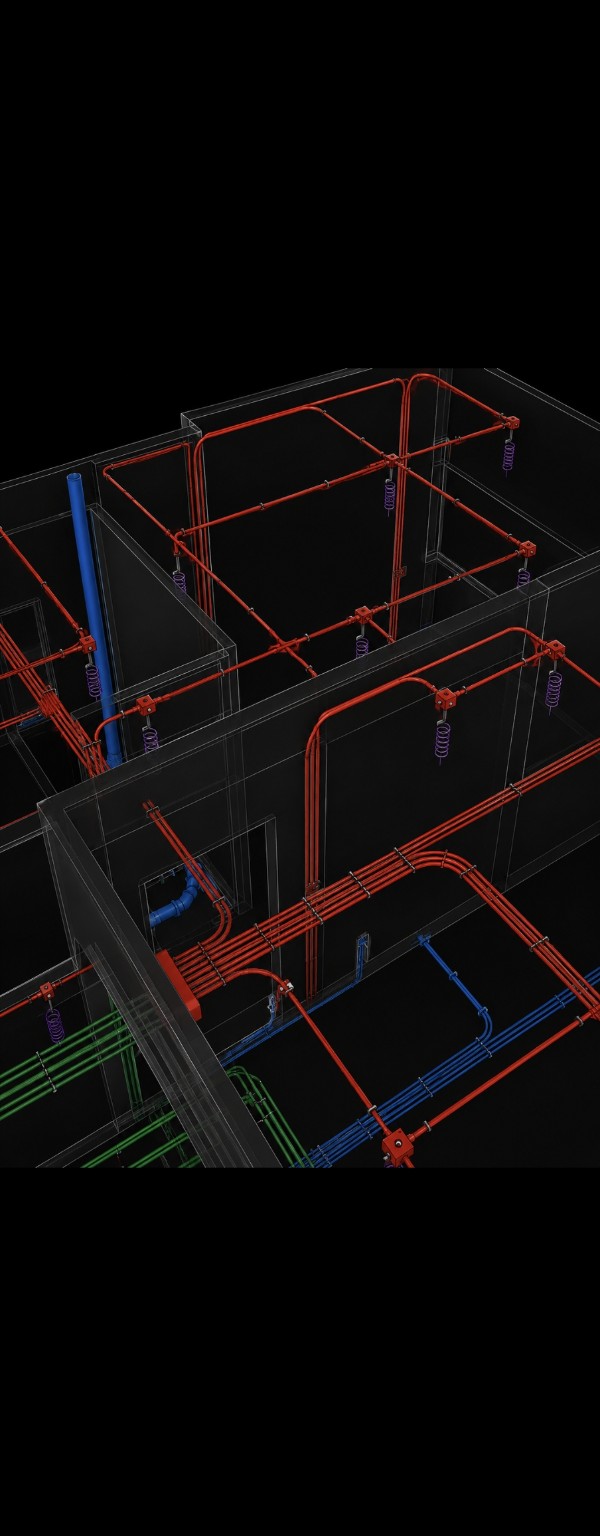
BIM is not only a visual model when objects can carry controlled evidence and lifecycle context.
Field and spatial direction
Spatial interfaces, photogrammetry, AR/VR and digital twin research are explored as ways to give people the right project context in the field. They remain R&D until a practical workflow proves them.
Technology evolution